
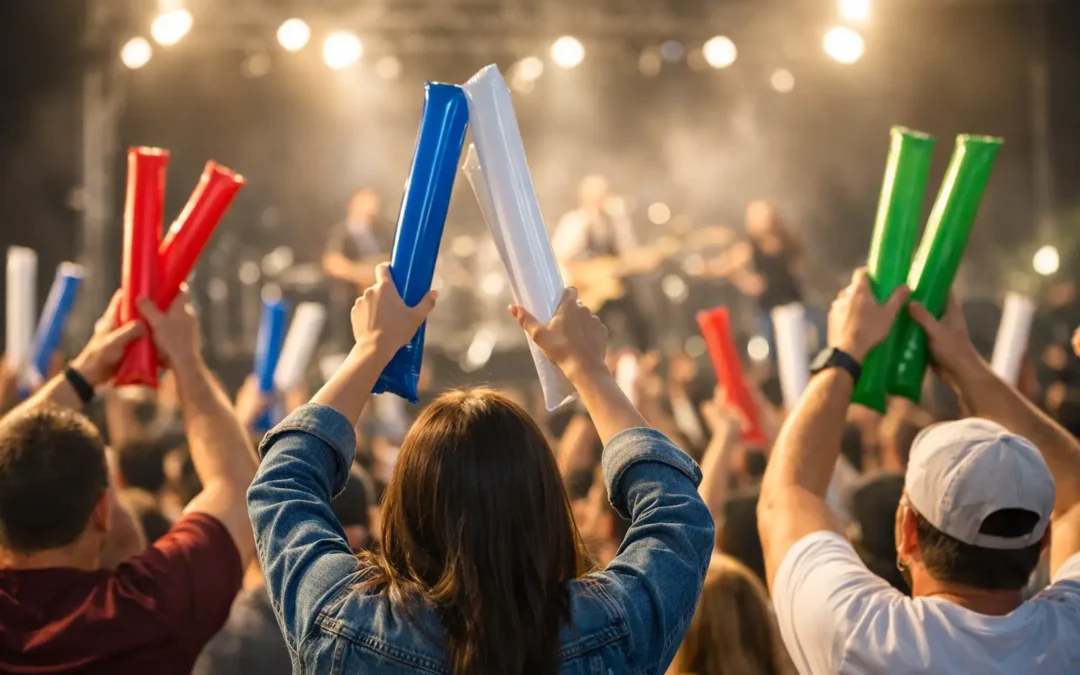
A quiet grandstand can make even a close game feel flat. The opposite is also true: when supporters are clapping, chanting and making noise at the right moments, players lift, sponsors get noticed and the whole event feels worth being part of. Knowing how to boost crowd energy is not about hoping people arrive in a party mood. It comes down to giving them a reason, a cue and an easy way to join in.
For sporting clubs, schools, festivals, campaign teams and brand activations, the best crowd atmosphere is planned before the gates open. A few practical decisions can turn passive spectators into a visible, vocal part of the action.
Start the Energy Before the Main Event
Crowd energy begins at arrival, not at the first whistle, opening act or keynote. If guests enter to silence, vague signage and no obvious activity, they will settle into spectator mode. Give them something to respond to straight away.
Use an MC, volunteer or event staff member at the entry point to welcome people with clear enthusiasm. Play music that suits the audience and the occasion. At a school carnival, that might mean upbeat, family-friendly tracks; at a club final, it may be the team song, player introductions and a louder build-up. The point is to signal that this is an event where participation is expected.
Distribution matters too. Put crowd items in people’s hands early, rather than leaving them stacked on a table near the gate. When supporters receive inflatable cheering sticks, flags or themed giveaways as they arrive, they are already carrying a reason to take part. They also create instant colour in photos, on the field perimeter and across the stands.
Make Participation Easy and Obvious
People are far more likely to cheer when they know exactly what to do. A broad instruction such as “make some noise” can work with an experienced supporter base, but it is less effective for a mixed crowd, young families or corporate guests who may feel unsure about joining in.
Give simple, specific prompts. Ask one side of the ground to respond to the other. Set up a three-clap cue. Bring the noise up for a key player, a final-minute defensive stand or the announcement of a raffle winner. Keep the instruction short enough that everyone can understand it immediately.
Visual cues help enormously in noisy environments. Put the message on the big screen, have your MC demonstrate the rhythm, or use volunteers near the front of the crowd to start the action. The first few rows often set the tone for everyone behind them, so place your most engaged people where they can be seen.
Custom cheering sticks are especially effective because they remove the awkwardness of deciding how to participate. Supporters simply clap them together. The noise is immediate, the movement is visible, and even first-time attendees can get involved without learning a chant.
Use Key Moments, Not Constant Noise
A crowd cannot stay at maximum volume for three hours. Trying to force it usually has the opposite effect. The smarter approach is to identify the moments that deserve a lift and build your prompts around them.
For sport, these may include team entrances, goals, tries, wickets, time-outs, quarter breaks and the final push. For a festival, look at artist walk-ons, prize draws, headline announcements and transitions between acts. At a product launch or business event, energy can peak around the reveal, a competition, audience voting or the end of a strong presentation.
Create a simple run sheet showing who calls each cue, what the crowd is asked to do and what equipment is needed. It does not need to be over-engineered. A short plan prevents the common problem of an MC remembering too late that there was supposed to be a cheer competition.
There is a trade-off here. Too many interruptions can disrupt a game, performance or speaker. Keep crowd activations sharp and tied to natural breaks. The best ones add to the occasion instead of competing with it.
Give the Crowd Something to Rally Around
Energy grows faster when people feel they are on the same side. That may be a team colour, a school house, a campaign message, a charity goal or a brand-led challenge. Make that shared identity visible.
Colour-coordinated merchandise turns individual attendees into one crowd. Printed cheering sticks in club colours, metallic finishes for a night event, or shaped items such as cricket bats, rugby balls and paw prints can make the theme instantly recognisable. A sea of matching movement looks powerful from the field, stage and camera position.
Branding should be clear but relevant. Put a sponsor logo beside the team name, event message or campaign line so the item feels like part of the experience rather than a random advertisement. When the crowd uses it throughout the event, that brand receives repeated, high-visibility exposure in person and in event photography.
For sponsors, this is a more active form of signage. A banner is seen. A branded cheering stick is picked up, waved, clapped and taken home.
Build Friendly Competition Into the Programme
A little rivalry wakes up a room quickly. Run a cheer-off between seating sections, school houses, clubs or groups, then reward the winners with a simple prize, recognition on screen or the chance to lead the next chant.
Keep it positive and inclusive. The aim is to create momentum, not put people on the spot or make one section feel left out. At junior sport, invite parents and kids to compete together. At a corporate event, use tables or departments. At a public activation, ask the crowd to vote with noise or raised cheering sticks.
Your MC makes or breaks this activity. They need to be clear, quick and willing to react to what is happening. If one group gives a huge response, acknowledge it. If the first attempt is quiet, do not dwell on it – reset with a clearer instruction and another cue later in the programme.
Choose Crowd Gear That Works in the Real World
Novelty alone is not enough. Crowd merchandise needs to be easy to distribute, safe to use and suitable for the setting. Inflatable cheering sticks work well because they are lightweight, affordable and highly visible. They can be handed out at gates, placed on seats or included in event packs without complicated set-up.
The right option depends on your audience and budget. Standard printed sticks are a strong choice for large club days, school events and community fundraisers. Metallic or foil versions add impact under lights. LED options suit evening games, concerts and launch events where visibility is part of the experience. For a more tailored campaign, custom shapes can reinforce the sport, mascot or brand theme.
Think about quantity early. A half-filled stand with a few scattered giveaways will not create the same visual result as a coordinated distribution across a supporter zone. You do not always need to supply every attendee, but you should have enough items in the areas you want to activate.
Reusable items can also extend the value beyond one day. Supporters may bring them back to future matches, while clubs can hold extras for finals, presentation nights and sponsor activations.
Brief Your MC and Volunteers Properly
The biggest missed opportunity at crowd events is having great merchandise with no plan to use it. Your MC, ground announcer and volunteers should know when to prompt the crowd, where the active zones are and how to keep the message consistent.
Give them practical language, not a script that sounds forced. “Blue side, get those sticks up!” is better than a long explanation. “We need noise for the final two minutes!” gives people a reason to respond. If your event has a specific hashtag, sponsor message or chant, repeat it selectively so it sticks without becoming background noise.
Volunteers can also help distribute replacements, encourage quieter sections and make sure the crowd-facing side of the venue looks full of movement for photos and video. Their energy is contagious. If the people leading the activation look hesitant, the audience will be hesitant too.
Measure What Worked and Improve the Next One
Crowd energy is not always easy to put into a spreadsheet, but you can still learn from each event. Ask staff where the strongest response happened. Review photos and footage. Check whether sponsors received visible branding, whether giveaways were used, and whether people stayed engaged through key moments.
If supporters loved a cheer-off but missed the half-time giveaway, adjust your timing. If LED products looked brilliant at dusk but were unnecessary for an afternoon fixture, use that budget elsewhere next time. The goal is not to copy the same activation every time. It is to build a format your audience recognises and looks forward to.
Cheering Sticks can help Australian clubs, organisers and promotional teams match the right cheering products to the size, timing and theme of an event – with custom printing, practical options and a clear digital proof before production.
The crowd is already your greatest source of atmosphere. Give it colour, noise and a clear moment to act, then let the response carry through the venue.