A new shopfront can look polished, be fully stocked and still feel quiet if people have no reason to stop, participate or return. The strongest retail launch engagement examples turn the opening into an occasion: shoppers notice something happening, join in easily and leave with a clear memory of the brand.
For Australian retailers, centres, pop-up operators and promotional agencies, that does not always mean a large production budget. It means choosing one or two activities that suit the location, audience and purpose of the launch. A high-energy sportswear opening needs a different approach from a boutique beauty store or a family-focused local business.
What makes a retail launch worth joining?
A launch activity works when it gives passers-by a low-pressure reason to pause. It should be understandable from a few metres away, simple enough to join without prior knowledge and visually connected to the brand. The best activations also give staff a natural way to start conversations instead of relying on a hard sell.
Think beyond foot traffic alone. Decide what a useful result looks like before choosing the activity. It may be more email sign-ups, product demonstrations, social content, sponsor visibility, repeat visits or simply a livelier opening-day atmosphere. That decision will shape the right format.
10 retail launch engagement examples
1. A timed opening moment
Create one clearly scheduled moment that gives people a reason to be there at a particular time. It could be a ribbon reveal, a first-look product announcement, a countdown to opening or a short welcome from the founder. The key is making it visible and keeping it brief.
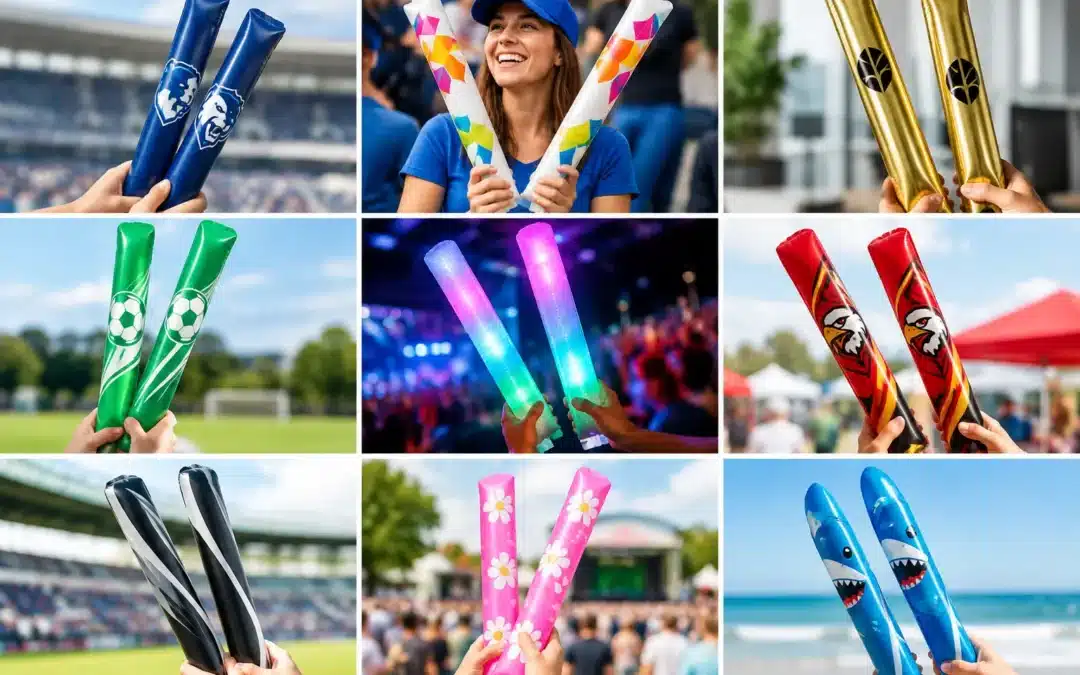
For launches near a busy precinct, a countdown supported by branded inflatable cheering sticks can build noise and draw attention without requiring a stage show. Give them out shortly before the moment, then invite the crowd to use them together on the count of three. Use only an appropriate product for the venue and supervise distribution where needed.
2. A first-customer reward with a fair entry method
A reward for early visitors creates urgency, but it needs to feel fair. Rather than promising a prize to a handful of people who happen to arrive first, offer a limited opening-day gift to customers who register, make a qualifying purchase or take part in a simple activity.
The reward does not have to be expensive. A branded item, a future-visit offer or early access to a limited product can be enough. Make terms clear at the counter so staff can explain the offer confidently and customers know what is available.
3. A try-before-you-buy station
Give people a practical reason to spend time in the store. A skincare retailer might offer guided product sampling, a sports retailer could run a quick equipment test, and a food business may offer small tastings where suitable. The activity should demonstrate one clear benefit rather than attempting to show the entire range.
Staff matter here. Assign a team member to welcome visitors, explain what they are trying and ask one useful question afterwards. That interaction can lead naturally to a recommendation, rather than leaving shoppers to work out the next step themselves.
4. A branded photo point that suits the space
A photo opportunity is most effective when it looks good without asking visitors to do too much. A bright backdrop, oversized product-inspired inflatable shape or a simple launch message can create a recognisable focal point near the entrance.
Avoid relying on a complicated hashtag or assuming every customer will post. The photo point still has value as visual theatre in the store and content for your own launch-day channels. If you encourage sharing, offer a small optional incentive rather than making it a condition of participation.
5. A short challenge with instant recognition
Quick games work because they give people a break from browsing. Match the challenge to the retailer and keep the instructions visible. For example, visitors could identify a featured item from clues, complete a 30-second styling challenge or answer a question based on a product display.
Recognition can be a small prize, a discount for the day or entry into a launch draw. The trade-off is queue management. If the game takes more than a minute or two, it may work better during quieter periods, or with a staff member directing people through the activity.
6. A local group appearance
A launch can feel more connected when it includes a local school group, community club, performer or relevant creative business. The partnership should have a genuine link to the audience or location, not just fill time on a run sheet.
For a family-oriented centre launch, a school music group might create a welcoming arrival window. For a fitness retailer, a local club could lead a short skills demonstration. If branded cheering products are used, custom colours and event messaging can help the activity look coordinated while giving the group something practical to use and take away.
7. A launch wall built by customers
Invite visitors to contribute one small piece to a growing display. They might add a message, choose a favourite product feature, place a coloured token on a board or write a goal connected to the brand. By the end of the day, the wall becomes proof that people participated.
This approach is useful for retailers wanting an engaging option that is quieter than a game or performance. It also gives staff a conversation starter and can reveal what customers are interested in. Keep the prompt specific. “What brought you in today?” will usually generate better responses than a vague request for feedback.
8. A product trail through the store
A trail is a practical way to encourage shoppers to explore beyond the front display. Place prompts at selected points around the shop, each highlighting a product, offer or useful detail. Visitors can collect answers on a card or scan a simple in-store code if that suits the audience.
Do not make the trail too long. Four or five stops is generally enough to create movement without feeling like homework. Finish at the counter, where staff can acknowledge completion and offer an appropriate reward or invitation to join the mailing list.
9. A sponsor or partner participation zone
When a launch includes sponsors, suppliers or complementary businesses, give them a defined role that adds value for shoppers. A partner could provide a demonstration, contribute a prize or host a useful mini-activity. This makes their presence feel purposeful instead of turning the retail floor into a row of logos.
Shared branded merchandise can work well here. For instance, custom inflatable cheering sticks can display a launch message on one side and an approved partner message on the other, subject to artwork approval. This gives both parties visibility while keeping the item relevant to the occasion.
10. A reason to come back next week
Opening day should not be the only moment customers hear from you. Give visitors a genuine reason to return, such as an upcoming product session, a follow-up offer, a new workshop or a second-stage reveal. The most useful incentive depends on your margin and customer buying cycle, so avoid blanket discounts if they do not suit the business.
Capture details respectfully and explain what people are signing up for. A simple choice between launch updates, new product news or event invitations can improve the quality of follow-up and make future messages more relevant.
Choosing the right activity for your launch
Start with the physical conditions. A compact shop may be better suited to sampling, a photo point or a product trail than a loud crowd activity. An outdoor pop-up may have more room for a timed countdown, larger inflatable displays or a partner activation, but it will also need a weather plan and clear equipment management.
Then consider the audience. Teen shoppers may respond quickly to a short challenge and visual content, while families often value activities that children can understand immediately. Corporate guests may prefer a structured demonstration and a chance to speak with staff. There is no single best activation because the venue, brand and launch objective all matter.
Custom promotional products are most effective when they support the activity, not when they are handed out without context. A coloured cheering stick can signal where the action is happening, build group participation during a countdown and carry the campaign message beyond the event. Artwork, quantity, product type and turnaround requirements can vary, so it is worth discussing the event details before ordering.
Plan the operational details early
Even simple engagement ideas need a practical run sheet. Confirm who sets up the activity, who welcomes participants, where queues will form, how prizes are managed and what happens if the venue becomes busy. Brief staff on the purpose of the activity and give them a clear opening line to use with visitors.
For custom cheering sticks or inflatable promotional products, allow time for artwork preparation and a digital proof before production. Share print-ready artwork where available, check that messaging is easy to read at a glance and choose colours that stand out in the venue. Cheering Sticks can assist organisations with selecting suitable custom options for their launch requirements.
A retail launch does not need to entertain everyone for hours. It needs one clear moment of participation that makes the opening feel active, welcoming and worth remembering. Choose the activity your team can deliver well, make the next step obvious, and give every visitor a reason to feel part of the first day.