A loud grandstand at a local final, a school colour day where every student joins the action, or a festival crowd responding together to a cue: these are the moments people remember. The most useful event audience participation trends are not about adding technology for its own sake. They are about giving people a clear, easy reason to take part.
For Australian event organisers, clubs, schools and promotional teams, the opportunity is practical. Well-planned participation builds atmosphere, supports team spirit, gives sponsors more visible exposure and turns attendees from spectators into contributors. The best approach depends on the venue, audience, budget and event objective, but several clear shifts are shaping how crowds engage.
Event audience participation trends: active, visible and shared
Passive attendance is becoming less attractive, particularly when audiences are used to creating and sharing their own content. People do not necessarily need a complex activity to feel involved. Often, they need a prompt that is visible, timed well and simple enough for everyone to understand in seconds.
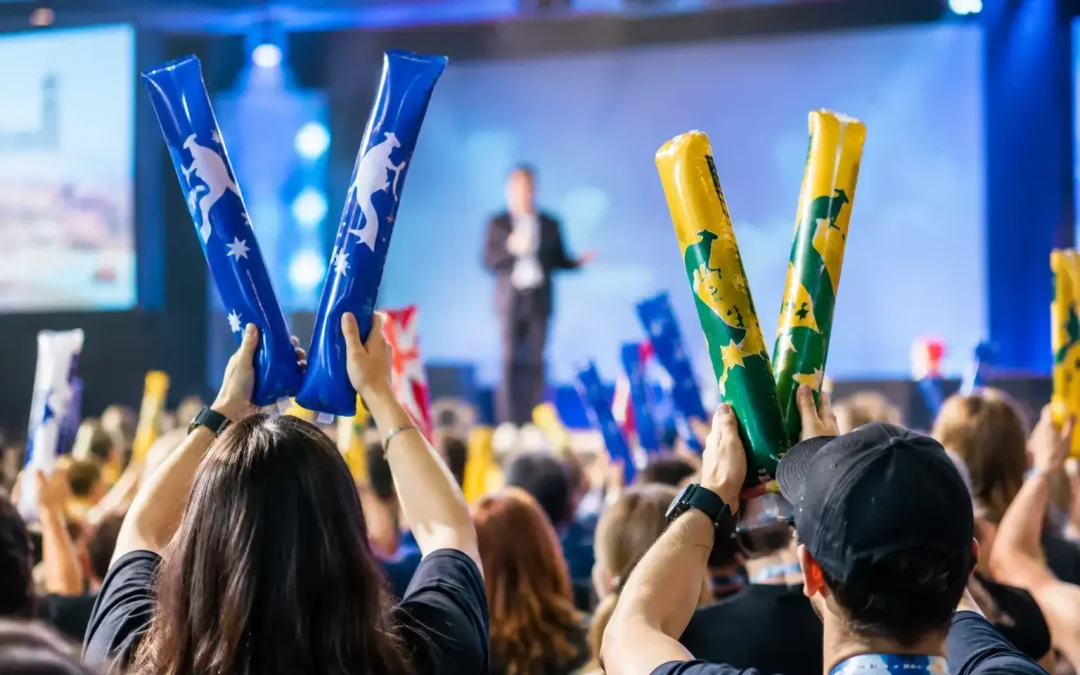
That is why physical crowd tools remain highly effective. Custom inflatable cheering sticks, LED cheering products and event-specific inflatable shapes create an immediate visual signal: this is the moment to get involved. They also work across age groups without requiring attendees to download an app, scan a code or have a reliable mobile signal.
The trend is towards participation that is collective rather than individual. A coordinated clap, colour display, supporter chant or half-time activation can make a crowd feel part of one shared occasion. For organisers, that sense of unity has value beyond the noise. It strengthens the event identity and makes photographs and video look more energetic.
Participation needs to be effortless
The strongest crowd activations have a low barrier to entry. If people must read lengthy instructions, register their details or wait for a staff member to explain what to do, a large part of the audience will simply watch instead.
A pair of branded cheering sticks is intuitive. Hand them out at entry points, place them on seats or include them in supporter packs, then give the crowd a cue at the right time. The action is immediate, visible and easy to repeat throughout the event.
This does not mean every activity should be noisy. A corporate launch may suit a coordinated visual moment using branded inflatables or LED products, while a school sports carnival may respond best to house colours and lively cheering. The product should fit the environment. A more restrained setting may call for a shorter activation or a visual display rather than sustained noise.
Timing matters more than novelty
The most original promotional item will have limited impact if it appears at the wrong moment. Participation rises when organisers connect it to a natural point in the event: team introductions, a key match period, an award announcement, a performance finale or a fundraising target.
Build these moments into the run sheet. Let the MC, announcer or screen content give a clear instruction, then leave enough time for the crowd to respond. Repeating a simple activation two or three times can work better than introducing several unrelated ideas that no one remembers.
Branded items are becoming part of the event experience
Promotional products work best when they do more than carry a logo. Event attendees are more likely to keep, use and photograph an item when it has a role in the occasion. Cheering sticks are a good example because they provide both a branded surface and a practical way to join the atmosphere.
For sponsors, this creates a more considered form of exposure. Instead of a logo sitting in the background, it can appear across a crowd during high-energy moments. A well-designed print should be easy to recognise from a distance, with a strong colour contrast and a message that is not overcrowded.
There is a trade-off. A detailed sponsor message, multiple logos and small print may be useful up close but can lose impact in a grandstand or event photo. For most cheering products, a simple brand mark, campaign line or event name tends to read more clearly. Artwork should also reflect how the product will be seen: in hands, in motion and often from several metres away.
Custom shapes are gaining attention where they reinforce the event theme. An inflatable cricket bat for a cricket day, a rugby ball for a club activation or a simple event-related shape can make the giveaway feel more purposeful. These options can be effective for campaigns seeking a distinctive visual, although they may require more planning than standard stick shapes.
Hybrid thinking remains useful, but physical engagement leads the room
Digital interaction still has a place at events. QR-based competitions, live polls and social posts can extend a campaign beyond the venue and provide useful audience feedback. However, they should support the live experience rather than distract from it.
A crowd cannot look at a screen, participate in a poll and respond to an on-field moment at the same time. When the aim is atmosphere, physical and visual prompts are generally more immediate. Digital elements are often best used before the event, during quieter intervals or after the main activation.
For example, a club could encourage supporters to share a photo from the stands after a coordinated cheer, rather than asking them to use their mobiles during it. This keeps the central moment focused while still creating material for social channels.
Inclusivity is a practical planning requirement
Audience participation should allow as many people as possible to join in comfortably. That means offering activities that do not rely only on speed, physical movement, loud voices or smartphone access. A visual colour wave, held-up cheering sticks or a simple applause cue can be more inclusive than a complex game.
Distribution also needs attention. If promotional items are part of the activation, decide how they will reach different sections of the venue, including seated areas, family zones and accessible viewing locations. The experience can quickly feel uneven if one part of the audience receives the product and another does not.
For schools and community events, organisers should consider age groups and supervision requirements when selecting products and planning use. Clear directions and sensible event management keep participation enjoyable and appropriate for the setting.
Short-form content is influencing event design
Event organisers increasingly think about what will look good in a photo or a short video. This is not just a social media trend. It is a useful test of whether an activation creates a genuine crowd moment.
A sea of matching colours, metallic cheering sticks catching the light or a coordinated supporter response can give an event a strong visual identity. The aim should not be to force attendees into creating content. Instead, create a moment worth recording naturally.
Consider where cameras will be positioned and what the crowd will see from their seats. Brand colours, print placement and distribution patterns all influence the final result. If the activation is intended to appear on a big screen or in post-event photography, discuss this early when planning product colours and artwork.
Measure the response, not just the giveaway quantity
Handing out a large number of promotional items does not automatically mean an event achieved strong engagement. Better measures include whether the crowd responded when prompted, how long participation lasted, the quality of photos and video, sponsor feedback, and whether attendees wanted to take the item home.
For a club or charity, the outcome might be a more spirited crowd and stronger recognition for a fundraising partner. For a corporate promotion, it may be brand recall, event photographs or enquiries generated from a campaign. Set the objective first, then choose the product and participation method that supports it.
It is also worth asking event staff what happened on the ground. Did distribution run smoothly? Were instructions clear? Did one stand or age group engage more than another? These small details are valuable when planning the next event.
Plan the crowd moment early
Custom crowd products need to be considered alongside venue logistics, artwork approvals and event timing, not as an afterthought in the final week. Quantities, colours, print requirements and delivery timing can vary depending on the product and level of customisation.
Cheering Sticks can assist Australian organisers with selecting suitable custom inflatable cheering products, preparing artwork and reviewing a digital proof before production. Providing the event date, required quantity, intended use and artwork early helps ensure the quote and product recommendation are relevant to the campaign.
The most successful participation trend is not a gimmick. It is a well-timed invitation for people to show support, celebrate together and become part of the picture. Start with the moment you want the crowd to create, then choose the product and plan that makes joining in feel natural.