A quiet grandstand looks flat on camera. A crowd waving matching colours, clapping inflatable cheering sticks and lighting up the venue gives sponsors, players and spectators something far more valuable: visible momentum. That is why fan engagement merchandise trends are moving beyond simple giveaways and towards products that actively make the crowd part of the event.
For Australian clubs, schools, festivals and campaign teams, the best merchandise is no longer just a logo on an item. It needs to create noise, colour, movement or a shared moment. It also needs to fit the budget, arrive on time and be simple to hand out at the gate. Here is what is shaping smarter merchandise decisions right now.
Fan engagement merchandise trends: participation wins
The strongest trend is participation. People remember what they did at an event more clearly than what they were handed. A cap may have a long life after game day, but a pair of branded thundersticks can turn thousands of individual spectators into one loud, highly visible crowd in seconds.
This changes how organisers assess value. Cost per unit still matters, particularly for community clubs and school events, but cost per reaction matters too. If an item gets used during a key match moment, appears in crowd photos and gives supporters a reason to cheer, it earns its place in the event plan.
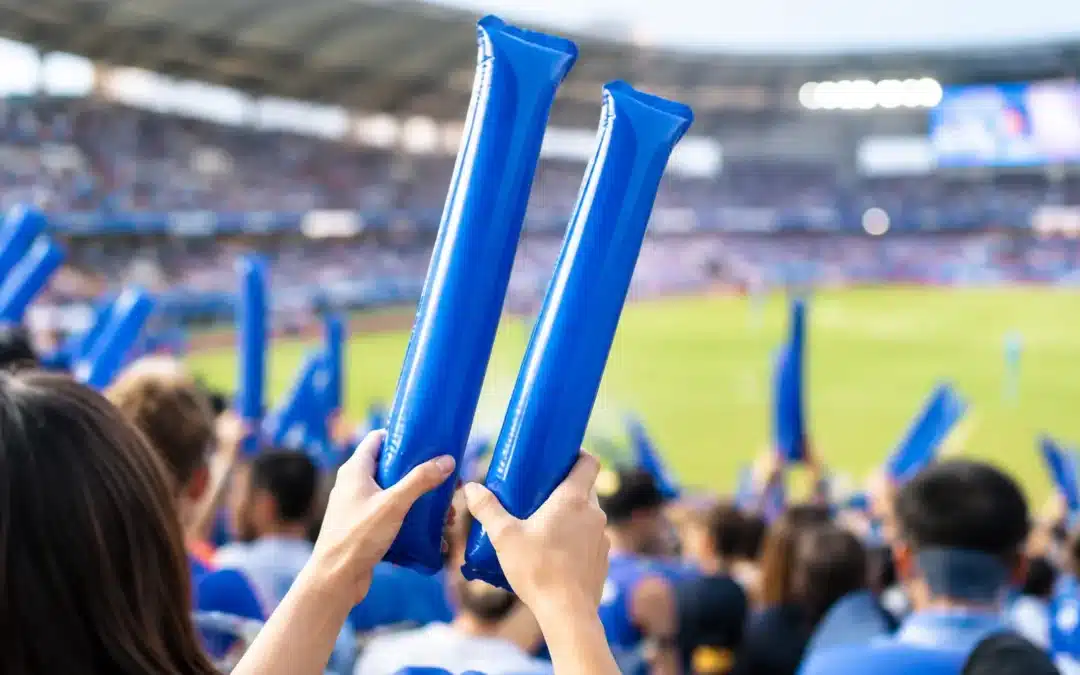
Inflatable cheering sticks remain a practical choice because they are lightweight to distribute, affordable at scale and instantly understood. Supporters do not need instructions. They inflate, bang and cheer. With a custom logo, team colours or campaign message printed across the sticks, every section of the crowd becomes part of the brand display.
The trade-off is that a high-energy product is designed for a particular moment. If your priority is a premium corporate gift or a long-term retail item, apparel, drinkware or bags may be a better fit. For atmosphere, however, active merchandise has a clear advantage.
Colour coordination is becoming part of the event design
Event merchandise is increasingly planned alongside signage, uniforms, stage lighting and social content. Organisers want a coordinated visual rather than a random mix of giveaway items. Team colours are the obvious starting point, but colour can also direct activity across a venue.
For example, one side of a ground can receive one colour while another receives a contrasting colour for a pre-game display. A school house competition can use separate colours for each group. A sponsor can own a colour zone without taking over every piece of event branding.
Metallic and foil finishes are gaining attention for night matches, concerts and indoor events because they catch venue lighting and stand out in photos. LED cheering products add another layer when the lights go down. They cost more than standard printed sticks, so they are usually best reserved for ticketed events, finales, televised activations or occasions where the visual payoff is worth the extra spend.
The practical lesson is simple: choose a finish based on where and when it will be used. A bright matte print can be excellent in full sun. Metallic colours and LEDs make more sense where lighting, broadcast footage or evening crowd shots are central to the experience.
Custom shapes make the message quicker to read
Standard cheering sticks are familiar and flexible, but custom shapes are helping organisations get their theme across before a supporter even reads the print. Cricket bat shapes suit a cricket club day. Rugby ball designs are a natural fit for a junior rugby carnival. Paw shapes bring school mascots, animal charities and community campaigns to life.
This matters because event environments are busy. People glance at merchandise while walking through gates, finding seats or watching play. A shape that immediately connects with the event reduces the need for a long slogan and makes the item more likely to appear in a quick photo or video.
Custom shapes need more planning than an off-the-shelf product. Artwork approval, production timing and minimum quantities can all vary. If the event date is close, a stock colour option with a clean printed message may be the safer choice. A reliable result on time beats an ambitious concept that misses the gate opening.
Reusable merchandise needs a realistic purpose
Reusability is an important conversation, but it should be handled honestly. Not every event item will be kept forever, and not every reusable product is used more than once. The better question is whether the item has a genuine second use.
Quality inflatable cheering sticks can be deflated and brought back for later fixtures, school carnivals and supporter days. Branded clappers, flags and LED products can also work across a season when the design is not tied to one date or one-off message. This is particularly useful for clubs that want to build a recognisable match-day look without buying entirely new stock every round.
For a one-night launch or campaign, the goal may be different. The priority could be maximum impact in one room, at one time. In that case, choose a product that delivers the required energy and plan sensible post-event collection or reuse where possible. Sustainability is strongest when it is built into the event process, not added as a vague claim on the artwork.
Sponsors want merchandise that earns attention
Sponsors are looking for more than logo placement. They want evidence that their investment was seen, photographed and associated with a positive crowd moment. Merchandise that creates a visible action helps deliver that.
A sponsor logo on a cheering stick, for instance, receives repeated exposure as the product is raised, waved and used throughout the event. A call-and-response moment on the big screen can turn that logo into part of the entertainment rather than background branding. The same thinking works for product launches, political rallies, charity walks and festival stages.
Keep the design disciplined. One key logo, a short message and strong contrast will usually outperform a crowded layout full of small marks. If several sponsors need inclusion, consider separate product zones, different distribution times or a main-event item supported by simpler sponsor collateral. Trying to fit every message onto one product weakens everybody’s visibility.
Fast turnaround is now part of the product decision
Event calendars change quickly. A team reaches a final, a venue confirms late, a sponsor comes on board or a campaign needs stock before a weekend activation. Buyers need suppliers that can give clear answers about artwork, production, freight and delivery rather than vague promises.
Start the order process as early as possible, especially for custom shapes, special finishes and large quantities. But do not assume a late request means the idea is dead. Stock items, selected colours and straightforward printing can provide a fast, effective solution when time is tight.
Before requesting a quote, have four details ready: required quantity, event date, delivery suburb and artwork or logo files. Also explain how the product will be distributed. Giving items away at entry requires a different quantity and packing approach than placing them on tables, selling them at a merchandise tent or deploying them during a planned crowd activation.
Cheering Sticks provides free digital proofs, which is a useful checkpoint before production. Use the proof to check logo placement, spelling, colours and any sponsor approvals. A two-minute review can prevent an expensive event-day problem.
Design for the person in the back row
The best crowd merchandise is readable from a distance. This is especially true at sporting grounds, festivals and school assemblies where the product will be viewed from across a court, field or auditorium.
Use high-contrast colours, bold logos and short wording. Avoid treating a cheering stick like a brochure. Fine print, long web addresses and detailed graphics tend to disappear once the crowd is moving. If your event has a hashtag or rallying phrase, keep it brief enough to be recognised in a photo.
Think about distribution at the same time as design. A product that looks fantastic in a flat artwork file can lose impact if only a small number of people receive it. For a big visual moment, enough units need to reach a concentrated part of the audience. For a premium experience, fewer higher-specification items may be the better choice.
The right merchandise should give people a reason to lift their hands, make some noise and show who they came to support. Choose the product around that moment, get the artwork approved early and make the crowd impossible to ignore.