
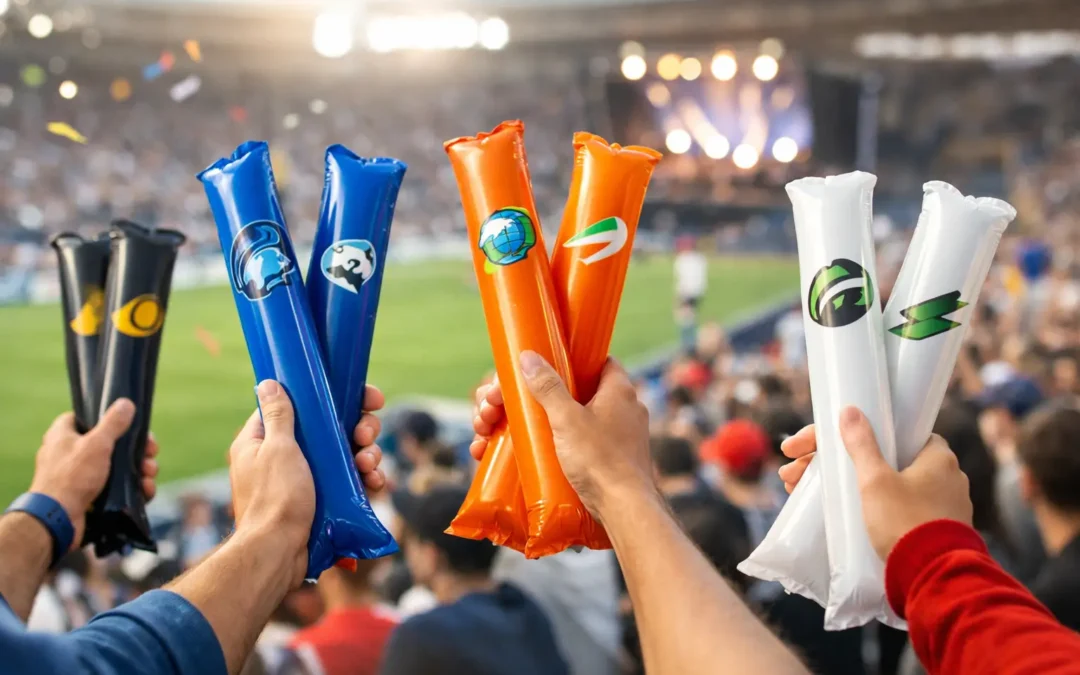
When the crowd is flat, you feel it straight away. The atmosphere drops, sponsors get less visibility, and even a well-run event can look underdone. That is exactly where this guide to custom thundersticks comes in – helping clubs, schools, marketers and event organisers choose cheering products that create noise, lift energy and put branding right in the middle of the action.
Custom thundersticks work because they do two jobs at once. They build excitement and they put your message in people’s hands. Whether you are backing a footy club, running a school sports carnival, launching a product, or supporting a political campaign, they are one of the simplest ways to make a crowd look louder, fuller and more engaged.
Why custom thundersticks still work
Some promotional products get handed out and forgotten. Thundersticks are different because they are part of the event itself. People do not need instructions. They clap them together, wave them around, hold them up for photos and take them home afterwards.
That makes them useful well beyond the first whistle or opening announcement. A good design keeps your logo visible in the stands, in social content and in event photography. If your goal is crowd participation, branded exposure or simply making the place feel bigger and more alive, custom inflatable cheering sticks punch well above their cost.
There is also a practical side. They are lightweight, easy to distribute, simple to pack, and affordable enough for high-volume events. For organisers watching budgets closely, that balance matters. You get visual impact and noise without the cost of more complex activations.
A guide to custom thundersticks starts with the event
The best product choice depends on where and how you are using them. A local junior club final has different needs from a national brand campaign. Before you look at colours, finishes or special shapes, get clear on four things: who is receiving them, how many you need, how quickly you need them, and what the product needs to achieve.
If you are buying for a sporting club, the focus is usually team colours, sponsor branding and crowd noise. Schools often want bright, fun designs that are safe and easy to hand out in bulk. Corporate event teams usually care more about presentation, print quality and matching a campaign identity. Political and community campaigns often prioritise visibility, low unit cost and quick turnaround.
This is where many buyers either overspend or order something that looks good on screen but does not fit the event. A metallic finish may stand out brilliantly under lights, for example, but a standard printed stick might be the better value option for a daytime community event with large attendance numbers.
Sizes, styles and special shapes
Standard inflatable thundersticks are the most common choice because they are versatile and cost-effective. They suit everything from club days to conferences. If you want a proven option that is easy to brand and easy to distribute, standard pairs are the safest place to start.
But standard is not your only option. Some campaigns get stronger results from custom shapes, especially when the shape ties directly to the theme. Cricket bats work well for cricket events and school sports promotions. Rugby ball shapes suit club and code-specific activations. Paw shapes are popular for mascots, schools and family events.
LED cheering sticks can also be a strong option, particularly for indoor venues, night matches, concerts and festivals. They cost more than basic inflatable options, so they are not always the right call for mass distribution. Still, if your event relies heavily on atmosphere and visual spectacle, the extra impact can justify the spend.
The key trade-off is simple. The more specialised the product, the more attention it can attract – but lead times, minimums and unit costs may shift. If timing is tight or the budget is fixed, a standard format with strong branding is often the smarter decision.
Getting the branding right
The strongest custom thundersticks are not necessarily the busiest. They are the easiest to recognise from a distance. A clean logo, bold colours and short messaging usually outperform cluttered artwork.
Think about where these will be seen. In a stadium or at a field, nobody is reading paragraphs. They are seeing shape, contrast and colour first. Your team name, sponsor logo or campaign slogan should be legible at a glance. If you try to force too much onto the print area, the result can look messy and lose impact.
For clubs and schools, matching official colours is usually the first priority. For businesses and event marketers, consistency with the rest of the campaign matters more. If your signage, uniforms and social assets all carry the same visual style, the cheering sticks become part of a more polished overall presentation.
It also helps to think about both sides of the stick. Depending on the format, you may be able to split the branding between a logo on one side and a short callout on the other. That gives you more flexibility without overcrowding the design.
Free digital proofs are especially valuable here. They let you check how the print will sit, whether colours are working, and whether text sizes are realistic before production begins.
Colour, finish and print choices
Colour does a lot of the heavy lifting. If your event is team-based, your thundersticks should instantly feel connected to the side, school or brand they represent. Even one wrong shade can make the product look generic instead of intentional.
Beyond standard colours, metallic and foil finishes can lift the look when you want more shine and a premium feel. These are popular for finals, major events and branded promotions where presentation matters. They can make the product more eye-catching in photos, especially under strong lighting.
That said, premium finishes are not always necessary. If your main goal is volume, crowd noise and simple branding, standard printed finishes often deliver better value. It depends on whether you are chasing spectacle, affordability, or a balance of both.
Lead times, minimums and planning ahead
One of the biggest mistakes buyers make is leaving the order too late. Custom products need artwork approval, production time and freight planning. If your event date is fixed, your ordering window should be fixed too.
The earlier you lock in your design, the more options you usually have. You can compare styles, consider custom shapes, and avoid paying extra for rushed production. Fast turnaround is possible, but rush decisions can limit your choices.
Minimum order quantities also matter. For large clubs, festivals and campaigns, this is rarely a problem. For smaller schools, local businesses or one-off events, stock items or lower-minimum options may be a better fit. That is often the smartest way to keep costs under control while still getting a strong result.
If you are ordering for multiple matches, campuses or event dates, ask yourself whether a broader run makes more sense. A slightly larger order can reduce unit cost and keep you covered for future use.
Who gets the best results from custom thundersticks?
Sporting clubs are the obvious fit, but they are far from the only ones. Schools use them for carnivals, open days and interschool competitions. Event organisers use them to make crowds look active and engaged. Promotional marketers use them as branded handouts that actually get used. Political teams use them to build visibility at rallies and public appearances.
The best results usually come when the product is tied to a clear moment. Finals day. Launch day. Sign-on day. A fundraising event. A televised match. If there is a crowd and a reason to get people involved, thundersticks make sense.
They also work well when distribution is simple. Gate entry, seat drops, sponsor activations and volunteer handouts all help get product into hands quickly. A great design means little if the sticks are still in cartons when the event starts.
How to buy with fewer headaches
A practical guide to custom thundersticks should make the buying process easier, not more complicated. Start with your event date and quantity. Then choose the style that suits the occasion, lock in colours and branding, and confirm what matters most – price, speed, finish or uniqueness.
If you are unsure, keep it simple. A standard pair in strong colours with clean branding is hard to beat. If you need something more distinctive, move into metallics, LEDs or shape-based designs once timing and budget are clear.
Working with an experienced Australian supplier also makes a difference. You want quick answers, realistic production advice and support that understands local event deadlines. That is especially important when you are juggling approvals, volunteers, venues and freight all at once.
At their best, custom thundersticks are not just noise-makers. They are part of the event experience, part of the branding, and part of what people remember when the crowd gets going. If you choose them with the event in mind, they do exactly what they should – get attention fast and keep the energy up when it counts.